Like most of the population I’ve been using my phone a lot to take photographs and there is one particular app that I tend use. I really like some of the looks that this app creates and I wondered if could recreate the look of my favourite settings in Photoshop, so after some playing around I finally came up with the following recipe which is a fair approximation. [More]
The key feature of the Orton effect is an overexposed image containing the detail, in good focus, sandwiched together with a second overexposed copy containing the color information, out of focus. With slides, the out of focus layer would also be overexposed, but combining the two slides (or three) has a darkening effect that counteracts the overexposed look of the individual slides. Here's how we can achieve it in Photoshop easily. [More]
I was recently asked how I was opening Jpeg files in Adobe Camera Raw (ACR). The reader told me that they had never been able to do this and wondered if this was a clever ‘Extra’ in Photoshop. Not at all is the answer so let me explain how it’s done, its just a setting hidden away. [More]
Today's post is in response to a problem I sometimes have, and I'm guessing that I am not alone. The problem is that my Lightroom catalogue is fairly sizeable and as I shoot weddings I have quite a few images by other photographers within Lightroom. So how do I quickly and easily find only my photos or that of another photographer? [More]
Photoshop CS6 brings us a great new 3D interface, with a great deal of new capability for working with our 3D objects. One new feature is the ability to split apart text into separate letters after the 3D text has been created. In today’s video, you’ll learn how to create 3D text, and how to split it apart. [More]
Do you prefer Black and white or Monochromatic? Whatever you choose to call it, taking away the colour from your photo will completely change it and often for the better.
You might be thinking that black and white is just that, black and white? So how can there be more than one way to do it and why would you want to even bother? Well just because mono images only contain shades of grey, that doesn't stop us taking control them and that’s exactly what I’m going to show you in this video. [More]
David Asch demonstrates how to separate an object and its original shadows from their background in Elements, in order to place them on a new background. [More]
Filling an area with patterns in Photoshop is a one-way street, and you're at the mercy of the pattern designer as to the scale of the results you'll get. Ordinary pattern fills are not scalable, in fact, there is no control or setting at all for a pattern fill. Use the Pattern Overlay layer style for a more customizable pattern fill. [More]
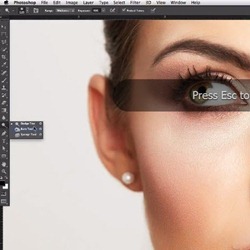
In this video I’ll demonstrate a very easy, yet highly effective way of bringing your subjects eyes ‘to life’ using nothing more than a couple of brushes and a mask in Photoshop or Photoshop Elements. [More]
Picking up from Part 1 of our Photoshop Touch tutorial (where I covered the organization of the UI, basic layering and selection options, basic tool options, and a simple layered workflow for [More]
Photoshop’s 3D capabilities in the Extended version have been getting better with each version, but sometimes it is the basics that can contribute to an interesting design element, and [More]
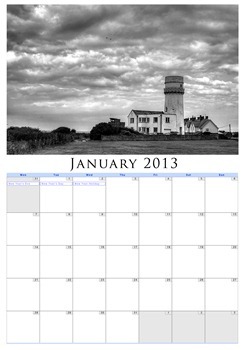
Its getting to that time of year again when we need to think of the next one, so here’s an easy and personal, way to create you own photo calendars in Photoshop. Unlike other tutorials this one [More]